
What sort of party wants a former neo-Nazi jailed for antisemitic abuse as a representative? That’s the question I can’t stop asking myself with regards to the sorry case of Joshua Bonehill-Paine, inexplicably selected as a Conservative local council candidate in Somerset. After intense backlash, Bonehill-Paine on Wednesday withdrew his candidacy – but both his selection and the Tory party’s initial response to the criticism of their candidate raise some uncomfortable questions.
“Neo-Nazi” and “antisemitic abuse” are terms that get bandied about a lot in the swirling cesspool of online political discourse, so it’s worth reiterating what Bonehill-Paine actually did. His sustained campaign of antisemitic harassment against the Jewish Labour MP Luciana Berger over a three-month period in 2014-5 is meticulously documented in the sentencing remarks of the judge who imposed the maximum sentence for his crimes, saying it was “difficult to envisage a worse case than this of racially aggravated harassment of this kind”.
In a series of blogposts targeting Berger, Bonehill-Paine “described her as a racist and a fascist who hated all white British people, a vile Jewish middle class anti-British pro-genocide rodent and a very evil woman who supported anything other than Britain”, alongside an image of her face superimposed onto an image of a rat. He accused the Labour party of being “a Jewish party”, referred to “Operation Filthy Jew Bitch”, and boasted that Berger had received 2,500 antisemitic tweets as a result of his efforts.
This hate campaign took place while Bonehill-Paine was serving a suspended sentence for other malicious communication offences, including accusing random people of being paedophiles. Another conviction involved a “hoax” suggesting a pub in Leicester had banned British armed forces to avoid offending the immigrant population – which, according to the owner of the pub, resulted in a thousand calls from people threatening to firebomb the venue and beat up staff. He had previously been convicted for assaulting a police officer and burglarising a police station. While he was on bail awaiting trial for the Luciana Berger offences, he was arrested and convicted for a separate offence of stirring up racial hatred, after publishing a blogpost encouraging a neo Nazi rally, which he described as an “anti-Jewification event” to “liberate” the Jewish area of Golders Green in north London. For this and the Berger crimes, he was sentenced to over five years.

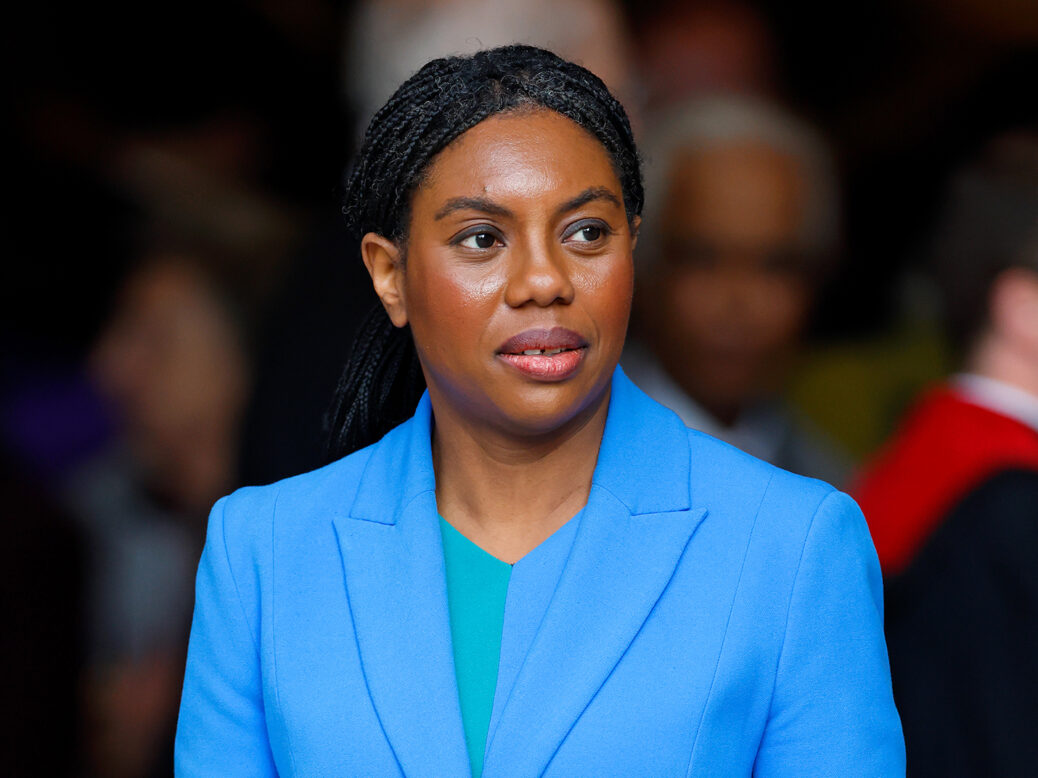
This did not halt his trajectory to stand as a candidate for the Conservative party. When the full extent of his criminal history came to light, Kemi Badenoch doubled down on his selection, arguing: “Yes, he is somebody who had been previously convicted but he is someone who has shown contrition for his crimes, has been rehabilitated and is spending every day working to solve the very problem which he knew that he had caused previously. And the Conservative party believes in second chances.”
There is, to be blunt, an awful lot going on here – that tells us more about the Tory party than its leader perhaps realises.
Let’s start with rehabilitation. Bonehill-Paine claims to be a reformed antisemite. In a blogpost from April this year entitled “Inside the Mind of an Antisemite — and How I Escaped It”, he details with surprising candour his descent into the worst kinds of anti-Jewish ideology. He writes how he saw himself “as a brave freedom fighter defending the white race against a Jewish programme of destruction” and describing how he “began targeting Jewish MPs and becoming loudly vocal about what we called ‘Jewish infiltration’”.
He recounts how it was only in prison that he came to reconsider his devout antisemitism, first when encountering a Jewish inmate (“I could not fathom how a Jewish man had ended up in prison at all, because I had been led to believe that Jews escaped justice”), then further after reading the Bible and learning “that Christ himself was a Jew, that the apostles were Jews, that the roots of Christianity are Jewish, and that you cannot claim to love Christ while hating the people through whom God chose to reveal so much of His redemptive purpose”. This epiphany led him to seek out anti-radicalisation support. According to the Conservative party, he has been certified by the Home Office to train police officers in countering extremism. This, in Kemi Badenoch’s eyes, is what makes him not just a viable candidate for local government, but an attractive one.
His victims have different perspective. Luciana Berger, now a Labour peer, has written of how seeing the news about her harasser “hit me like a punch to the stomach”. She writes how it felt having to testify at the Old Bailey while six months pregnant, explaining to the court how the abuse she received both from Bonehill-Paine himself and from others encouraged by him made her fear for her personal safety.
Most damningly of all, she recalls: “Throughout the trial, he showed no contrition. None. At one point he performed a full Nazi salute to his supporters in the public gallery.” This is echoed in the judge’s sentencing remarks: “You do not have the mitigation of a guilty plea, nor have you expressed any remorse. On the contrary you sat in the dock smirking throughout the trial and I noted your demeanour whilst Ms Berger was giving evidence. You plainly enjoyed her discomfort.”
Bonehill-Paine’s supporters would argue that he has shown contrition since, after his conversion in prison. But it is notable that his blogpost makes no apology to Berger, nor to the wider Jewish community. He writes about “life after antisemitism” and the joy he has found in fatherhood and travel, but makes no mention of the impact his crimes might still be having on his victims, who may not have been able to move on so easily – who may, as Berger has revealed she is, still be “haunted” by the case”.
Rehabilitation does not mean acting as though a person’s crimes never occurred. As Berger has pointed out, “there’s a gulf between being sorry and being allowed to stand for election”, adding “we should not have to watch the people who harmed us be elevated without any acknowledgement of what happened” in recognition that the victims matter too. People who have served their sentences for serious crimes should have the chance to rebuild their lives. That does not automatically make them appropriate candidates for public office.
Moreover, Badenoch’s assertion that “the Conservative party believes in second chances” rings untrue. This was hardly the Tory attitude when, for example, Louise Haigh’s spent conviction from a decade ago for falsely reporting a stolen mobile phone came to light, ending her career in Keir Starmer’s cabinet. Nor does the party seem interested in rehabilitation or forgiveness when it comes to its chronic underfunding of probation services when last in office, or its policy that any foreign national in the UK with a criminal conviction, however minor, should be deported. It seems some are more deserving of second chances than others.
I am unaware if the implicit invitation for ex-offenders to stand as Tory candidates extends to those convicted of other crimes, or if it is only former neo-Nazis who need apply. What we do know is that the criteria for representing the Conservative party have narrowed dramatically under Badenoch’s leadership. Only a month ago she announced that Conservative hopefuls who backed either attempting to reach net zero by 2050 or Britain remaining in the European Court of Human Rights – both Tory policies until recently – were “not serious” and would not be allowed to stand as candidates. A week later, Lord Barwell, a former Conservative minister who served as Theresa May’s chief of staff, had the Tory whip removed. The former Tory party chairman Grant Shapps has also been rejected as a parliamentary candidate.
If Joshua Bonehill-Paine really has been fully liberated of his abhorrent anti-Jew hatred, I wish him well. Neither that nor his decision to withdraw after facing extreme pressure makes me feel any less uneasy about a party championing him for election, especially considering who they are keeping out. The party seems to be rejecting Conservatives whose views are more moderate than Kemi Badenoch’s, while signalling that convicted antisemitic abusers are welcome, so long as they have the correct opinions. The message that sends about the priorities of His Majesty’s Opposition could not be clearer.
[Further reading: Jeremy Corbyn still haunts the Labour Party]
Content from our partners


Related

Join the debate
Subscribe here to commentBadenoch is not a serious minded prrson so her reaching for appeal to racist zenophobes on the right doesn’t entirely surprise me.What does surprise me is her willingness to expend her limited public political capital on a minor local figure when she is striking out for higher ground to get public recognition.So often she misjudges the room temperature.Does she not have any advisors capable of penetrating her armour of invincibility?